

The Installation
Everything About Ai Weiwei’s Sunflower Seeds
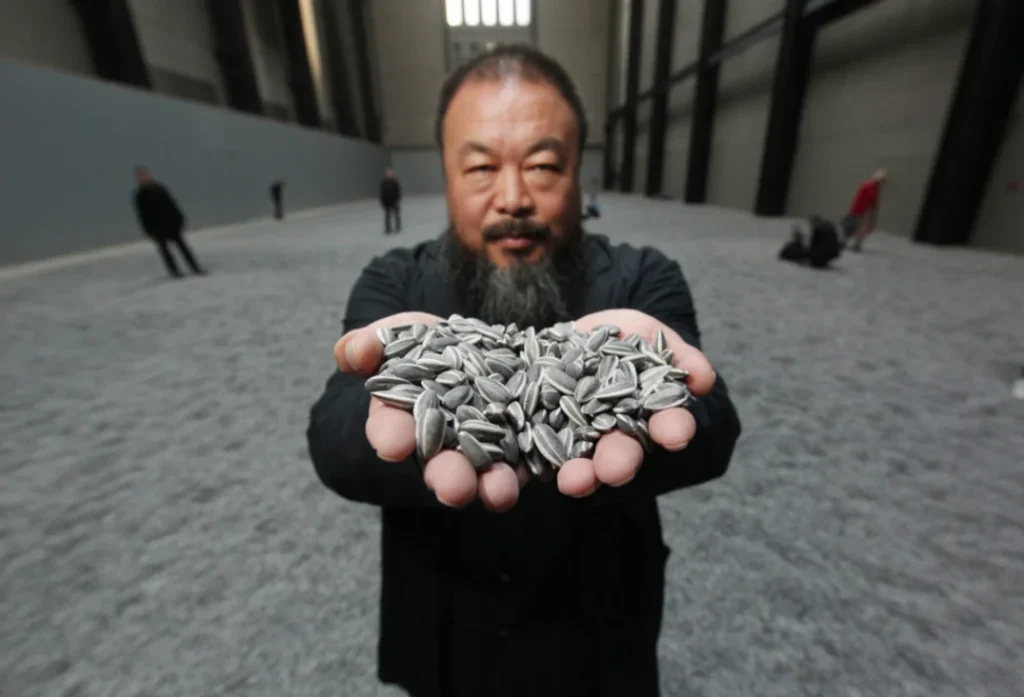
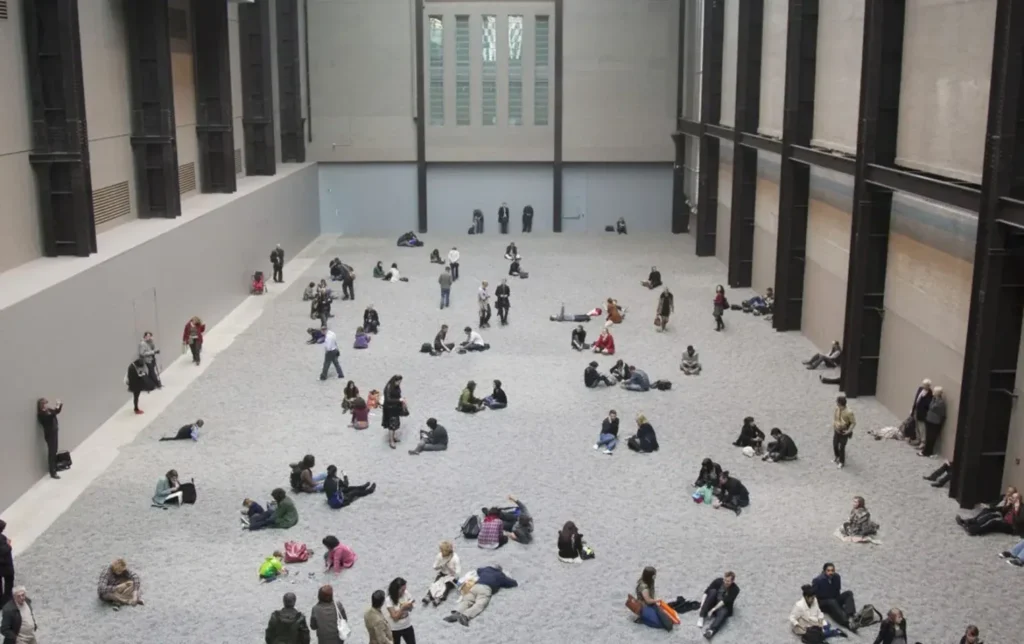
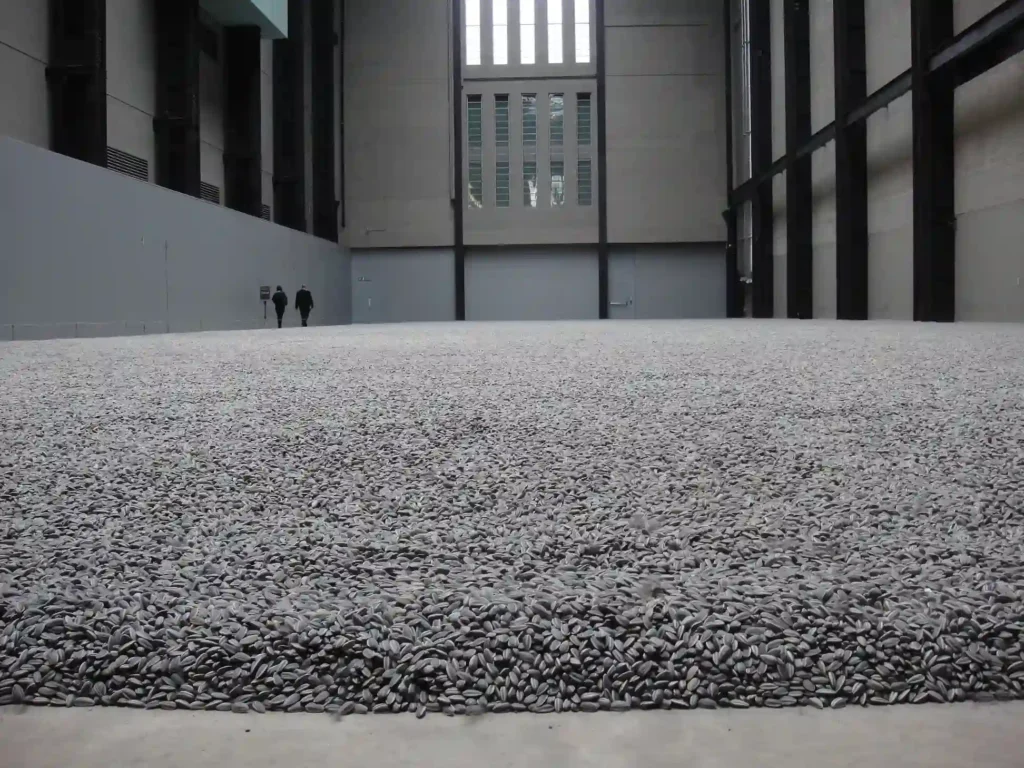
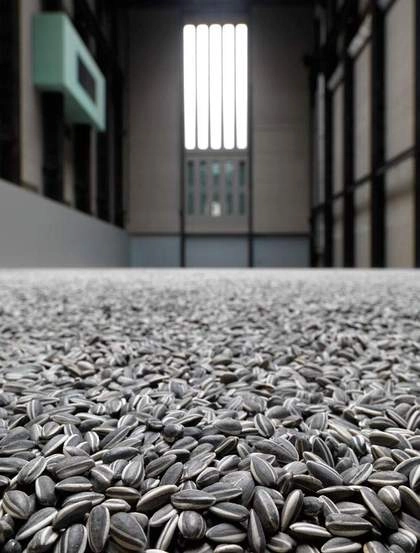
One of the most visually striking works in modern art history is the massive installation at the Tate Modern. When discussing facts About Ai Weiwei’s Sunflower Seeds, we are looking at a masterpiece that consists of one hundred million tiny porcelain sculptures. At first glance, they look identical to real husks, forming a vast grey landscape that fills the entire exhibition hall.
The sheer scale of this work is meant to overwhelm the senses. It covers one thousand square meters and weighs over one hundred and fifty tons. Visitors were initially invited to walk across this crunching landscape, experiencing the artwork physically, though this was later changed due to health concerns regarding ceramic dust.
The Process
Handcrafted By Artisans In Jingdezhen
What makes this installation truly mind-bending is that not a single seed was factory-made. Each one was individually sculpted and painted by hand. Ai Weiwei employed over 1,600 artisans in the city of Jingdezhen, a place famous for its history of porcelain production, to bring this vision to life over the span of two and a half years.
This traditional method of production stands in stark contrast to the modern perception of “Made in China.” Instead of mass-manufactured cheap goods, we see millions of unique objects created with immense skill and patience. It transforms a common street snack into a symbol of precious labor and collective effort.
Symbolism And The Viewer Experience
The meaning behind the seeds is layered and open to interpretation. In China, sunflower seeds are a common street snack shared among friends, but during the Cultural Revolution, propaganda imagery often depicted Chairman Mao as the sun and the people as sunflowers turning towards him. The work questions the relationship between the individual and the masses.
From a distance, the seeds appear as a uniform grey mass, indistinguishable from one another. However, when you look closely or hold one in your hand, you realize that every single seed is distinct. This powerful visual metaphor challenges us to think about individuality in a society where people are often treated as just numbers in a crowd.
The interaction between the public and the art was also a crucial part of the performance. The sound of millions of porcelain pieces rubbing together created a sensory environment that was both industrial and natural. Although walking on them is no longer permitted, the visual impact remains just as potent, reminding us of the power of collective action.
The Legacy Of A Masterpiece
This artwork cemented Ai Weiwei’s status as a global icon of contemporary art. It demonstrated how art could be both minimal in aesthetic and maximal in effort. The piece travels the world today in smaller batches, allowing different audiences to witness the detailed craftsmanship up close.
For students and art lovers, this work serves as a perfect example of conceptual art executed with traditional skills. It bridges the gap between old-world craftsmanship and modern commentary. It teaches us that even the smallest, most insignificant object can carry the weight of history and profound political meaning.
University assignments frequently require careful structure and clarity. https://essaypro.com/pay-for-homework helps students handle written tasks with more confidence.
Stealth mode approved: anonymous ordering, encrypted chats, and no-name delivery. This service that write law essays ideal for anyone who values maximum privacy while still getting professional-level work.